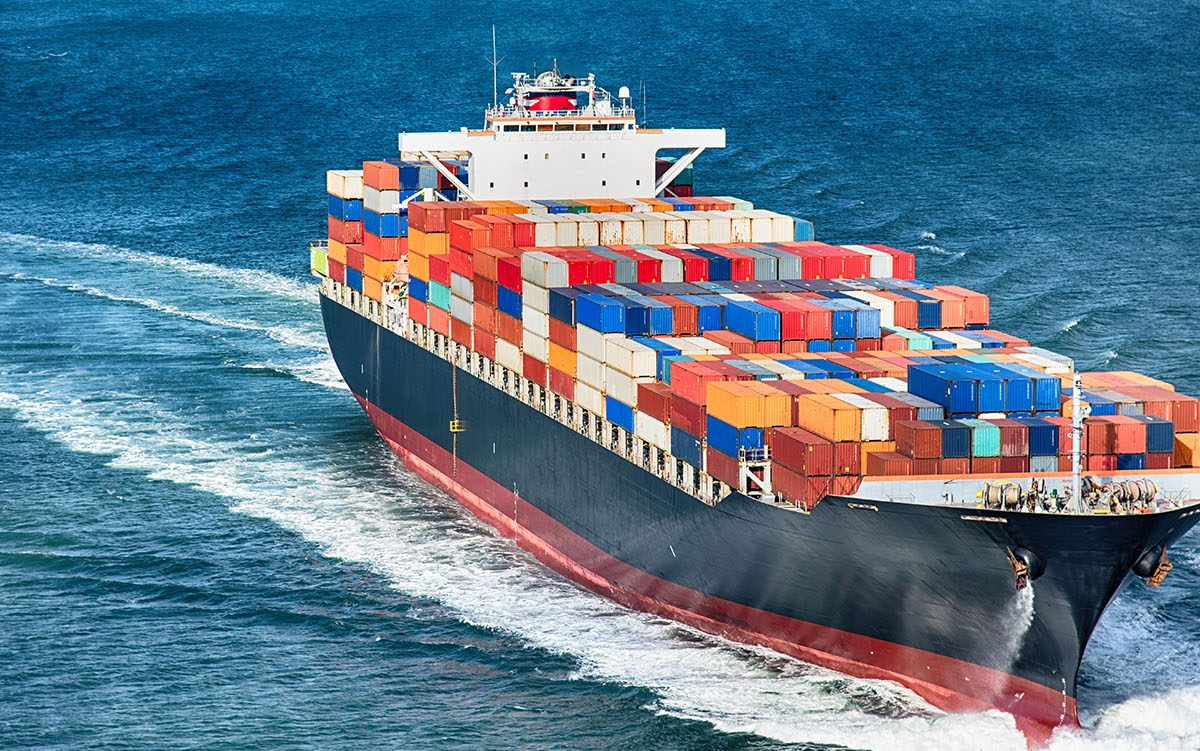
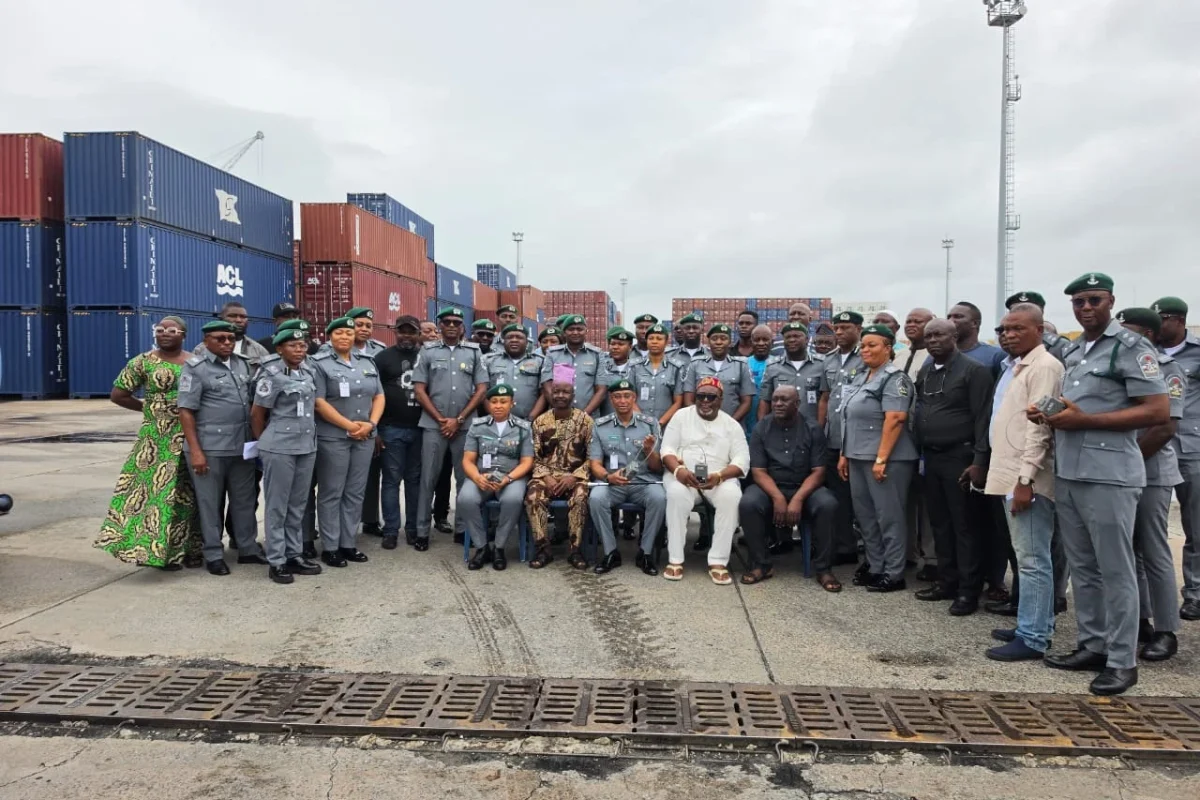
Stakeholders have lamented that overregulation and regulatory overlap are affecting operations in the nation’s maritime industry.
The concerns were raised last week at a shipping and maritime webinar themed, ‘Nigeria’s Maritime Compliance Landscape: Balancing Local Requirements and Global Competitiveness.’
Speaking during the webinar organised by Dentons ACAS-Law, a Nigerian commercial law firm, the President of the Shipowners Association of Nigeria, Sunny Ejah, explained that the nation’s maritime sector operates as one of the most regulated sectors of the economy.
Ejah said the problem is not regulation itself but ensuring it drives greater compliance and enhances competitiveness.
According to him, while this is a global business, it has to be carried out safely. “Therefore, regulation itself is not a challenge; the real issue is ensuring that regulation promotes more compliance and competitiveness.”
“As president of SOAN, we have had interactions with stakeholders where these challenges come to bear. I will start with the first one, which is the regulatory overlap; you have a situation where various agencies often exercise oversight functions on the same issue. A typical issue is where you have this government agency coming up with this agenda and the other agency is also handling the same,” Ejah said.
He also highlighted the issue of multiple documentation required to execute an operation, “and these things come at a cost; they are not free. So, at the end of the day, what we have often advocated has always been for greater coordination among these regulators and all that. I have asked if all these agencies can come together as one.”
He mentioned the inability to predict the regulatory processes as another major challenge facing the sector.
“The other challenge has to do with how to predict all these processes; where you can’t predict them it is a huge challenge. At the end of the day, if we are not able to predict the outcome in terms of regulation in Nigeria, it will affect us. Of course, if I am looking forward to partnering with an investor, some of them are looking for certain guiding licences and approvals and all that, and when they are not predictable, it becomes difficult to plan,” he said.
“Another issue is that of international best practices as well. I know as a country we have made commendable progress in implementing some of the international maritime conventions, but then there is a need for us to continually review our local regulations to ensure that as we are playing in this industry, facilitating global trade, we are also encouraging investment and strengthening indigenous capacity while we remain fully aligned with global standards,” Ejah added.
The shipowner emphasised that compliance and competitiveness should not be viewed as opposing factors.
Ejah stated that there should be a close working relationship between industries and regulators, saying, “There has to be this handshake between the two, both the regulators and industries.”
Also speaking, the General Counsel at Oriental Energy, Daniel Sesogbon, maintained that regulatory overlap is not peculiar to the maritime sector.
“Overlapping regulations in the maritime sector are something that is not just in the maritime sector. In the oil and gas sector, we have many levels of regulation; we are possibly overregulated as well. We have a certain number of regulators within the system,” he said.
Sesogbon called for the need for successful shipowners to start handling successful Nigerian offshore projects.
“We need successful Nigerian shipowners to be able to handle successful Nigerian offshore projects. The involvement of the Nigerian Navy, how they interact with commercial operators, is something we need to keep an eye on. To be fair, the Nigerian Maritime Administration and Safety Agency is commercially aware, while the Navy is not commercially aware of the effects of the decisions they take,” he said.
Meanwhile, the Partner and Head of Shipping & Dispute Resolution Practice Group at Dentons ACAS-Law, Chisa Uba, admitted being at an event where someone said that the maritime industry is overregulated and how cumbersome it is for the operators.
According to her, for decades the nation’s maritime industry has been a critical gateway for West African trade; the level of regulations is understandable, stressing that the sector is vast with many different sectors for which the individual laws are tailored.
Uba pointed out that every regulatory oversight and compliance obligation has the potential to affect operations, and perhaps even investors’ confidence, if the effect is negative.
“The main challenges facing stakeholders in the industry are not mainly the number of regulations but achieving an efficient compliance framework while remaining competitive in an increasingly global marketplace. Some of the compliance challenges often reported by stakeholders in the industry include delayed processes, overlapping regulatory functions and uncertainty in regulatory processes. These challenges are not merely compliance issues; they are operational and commercial risks that affect business plans, competitiveness and investments,” Uba said.
She added that the webinar addressed the issues directly by examining the key compliance challenges affecting the Nigerian maritime industry, “the practical implications for operators, and exploring viable practical solutions to promote more efficient complaint procedures.”